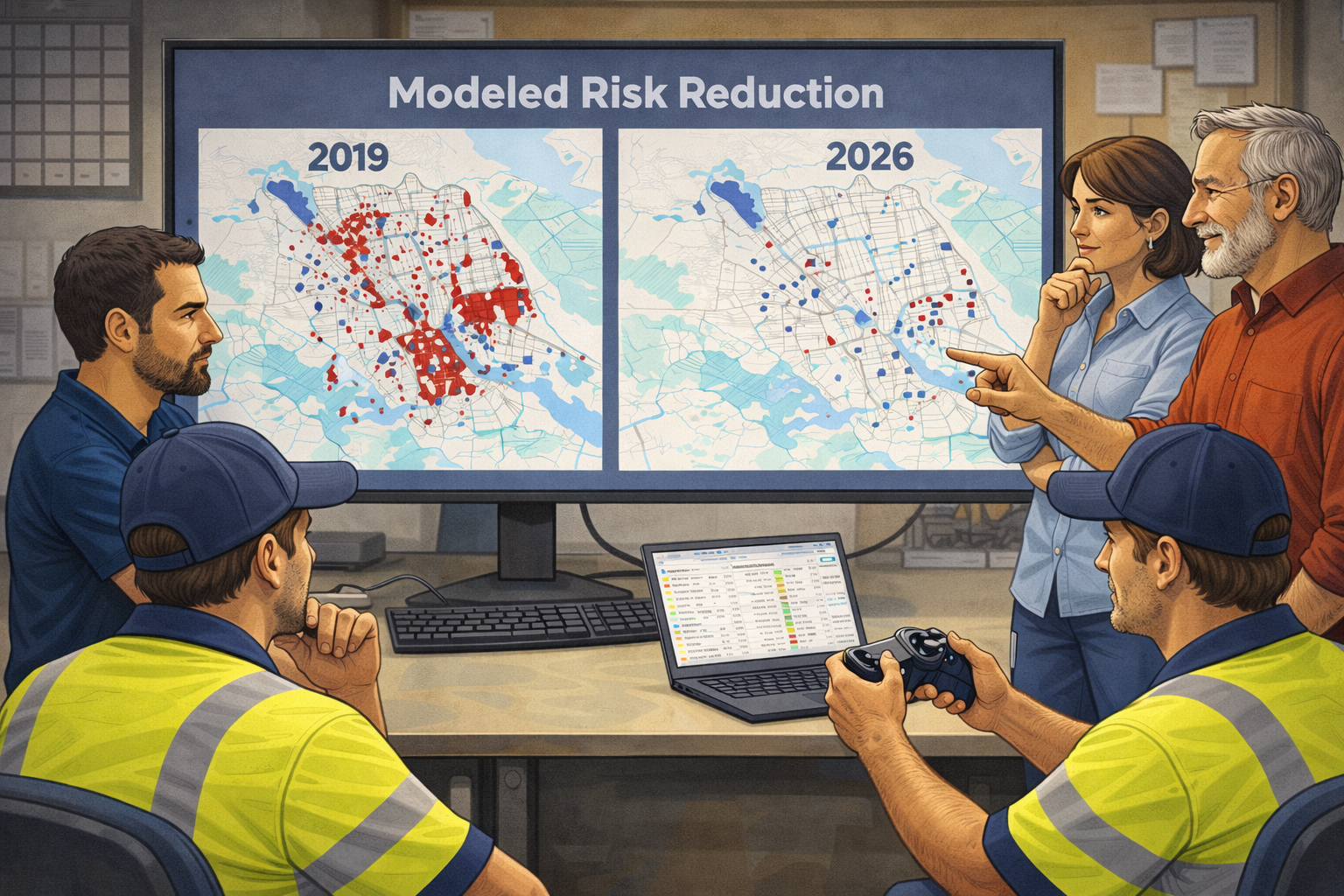
Modeled Spill Risk Reduction
Forward Lateral helps cities reduce private sewer lateral spill risk by turning existing data into a measurable, defensible prevention program.
Using municipal datasets—often sourced from ArcGIS, inspection records, and historical spill logs—we develop a clear baseline of current private lateral risk. This analysis looks across multiple years to identify where failures are occurring, how frequently they happen, and what conditions are contributing to those failures.
From this baseline, we work collaboratively with staff to evaluate opportunities to strengthen the city’s private lateral program. This may include refining inspection triggers (such as point-of-sale, remodel or ADU permits, or neighborhood-based campaigns), improving review workflows, and preparing council-ready recommendations that align policy, operations, and public communication.
Powered by the Forward Lateral platform, these program updates are implemented through a consistent and transparent inspection-and-review cycle. Defective laterals are brought out of the unknown and into a structured path toward repair. Homeowners receive clear notifications, contractors are given standardized next steps, and the city gains real-time visibility into inspection coverage and compliance progress.
As the program runs, Forward Lateral continuously measures outcomes. Risk maps are updated, inspection coverage expands, and year-over-year changes in defects, emergency failures, and spill incidents are tracked. The result is an evidence-based model that demonstrates how proactive inspection programs reduce municipal risk and improve overall system health.
Forward Lateral’s Sewer Spill Prevention Program is how these results are delivered. The software enables the work, but the foundation is a clear philosophy: inspections should be proactive, consistent, understandable to the public, and defensible to leadership.
How the Program Works
1. Initial Consultation
We begin with a no-cost consultation to understand the city’s existing private lateral program, technology stack, data sources, and regulatory framework.
2. Program & Data Review
Our team conducts a deep review of current inspection workflows, GIS data, spill history, and ordinance language to identify gaps and opportunities for improved outcomes.
3. Ordinance & Trigger Analysis
We evaluate existing and potential inspection triggers—such as property transfers, permits, or targeted neighborhood efforts—and how they align with local code and enforcement practices.
4. Public Outreach & Program Design
Forward Lateral helps structure clear, public-facing communication and produces a prioritized set of recommendations for program updates and policy alignment.
5. Standardization & Staff Training
Review processes, terminology, and communication templates are standardized. City staff are trained on the platform and workflows during a trial or pilot phase.
6. Platform Deployment & Data Integration
GIS layers, inspection records, and AI-assisted review tools are integrated into the Forward Lateral platform to support daily operations and reporting.
7. Ongoing Platform & Support
Forward Lateral provides continuous platform access, support, and outcome tracking to ensure the program evolves and continues delivering measurable risk reduction.