HOW THE PROGRAM WORKS
A simple, transparent, and modern approach to preventing private sewer lateral spills.
Forward Lateral provides a complete, step-by-step program that helps cities capture inspections, evaluate conditions, notify property owners, guide repairs, and maintain full compliance records. Everything is transparent, consistent, and powered by software platform that does what our consulting advises.
Start with your Sewer Risk Snapshot to see how the program would work in your city.
1. Capture Inspections
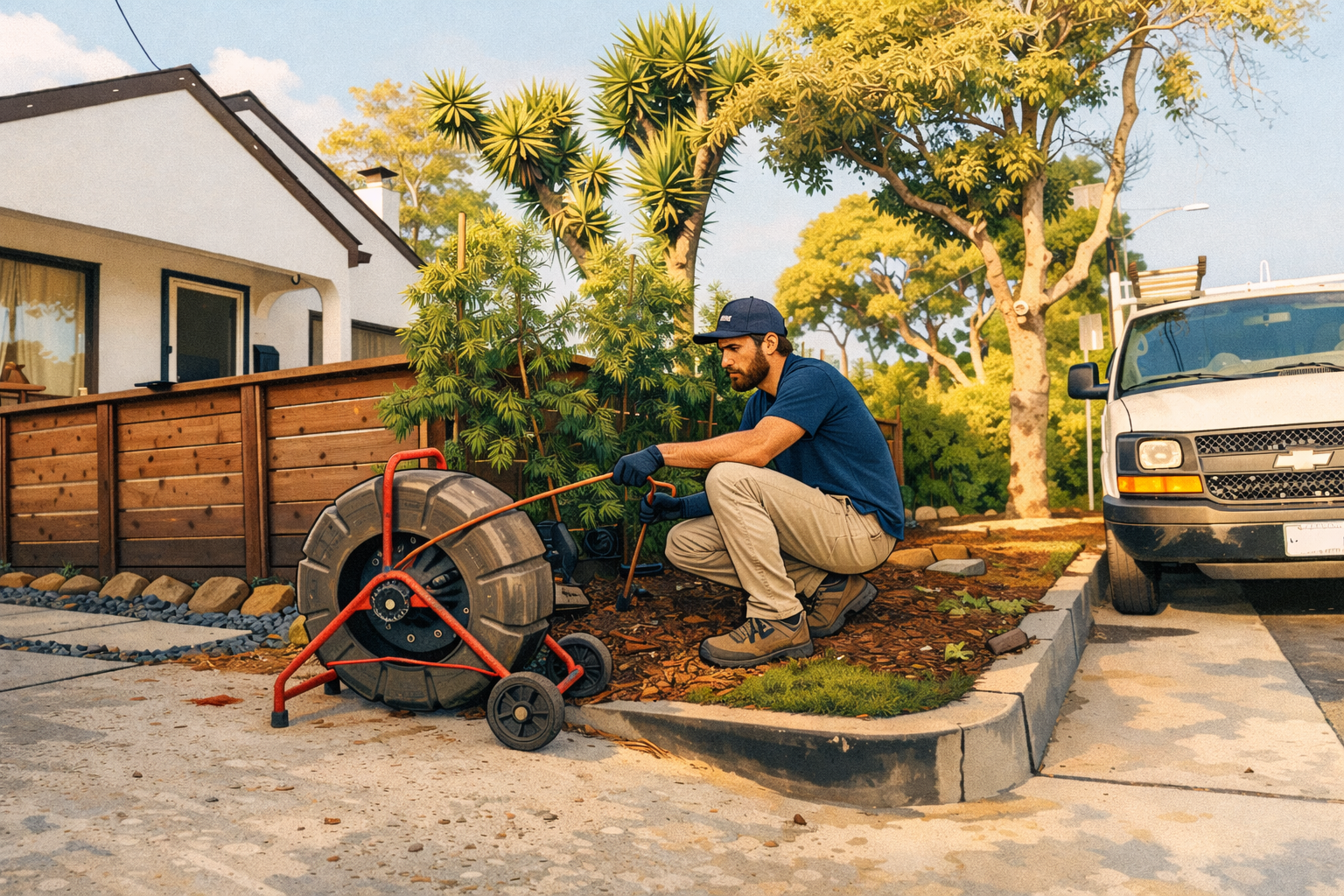
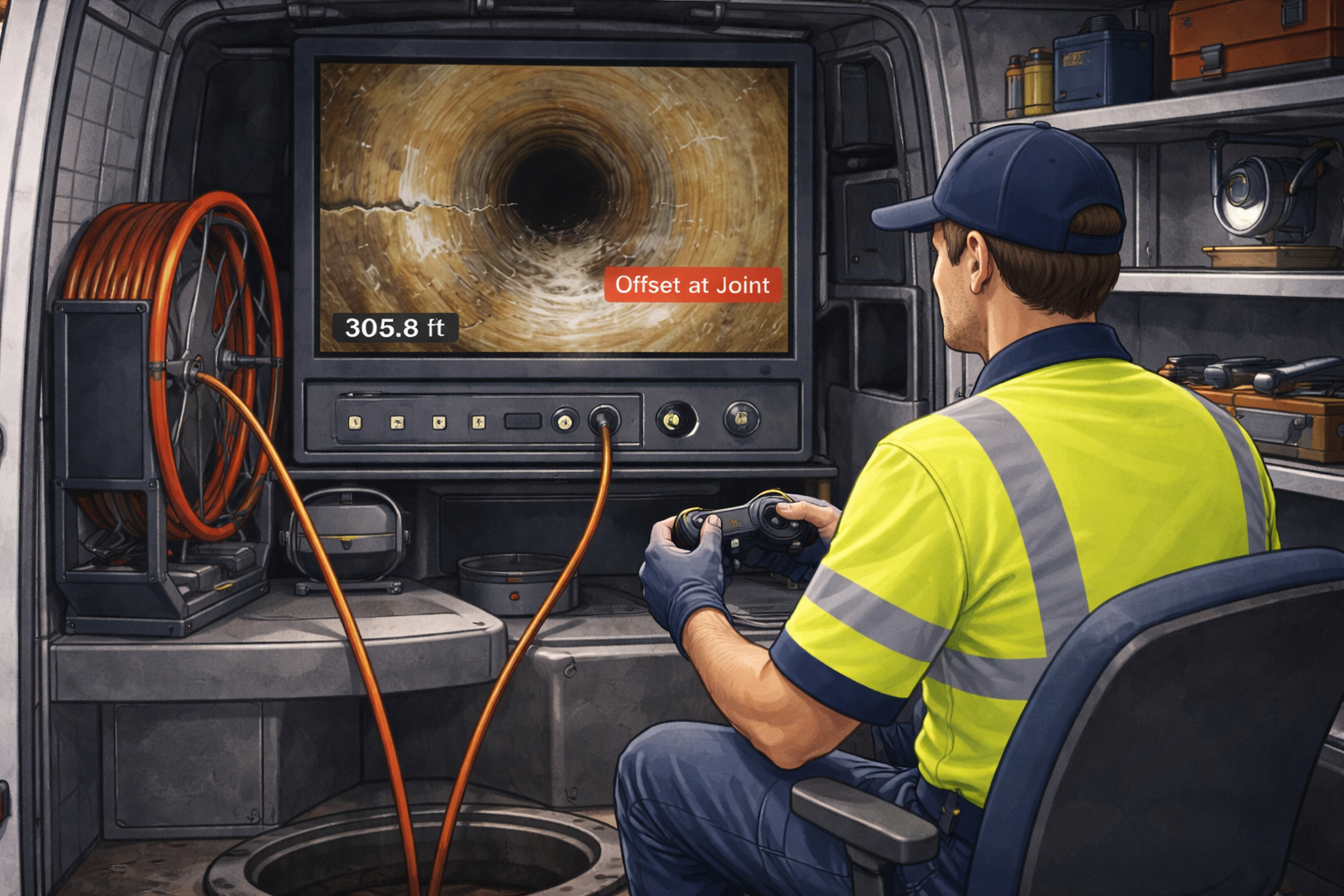
Inspections enter the system through two pathways: plumber-submitted CCTV videos or “pop-in” lateral videos captured during mainline CCTV work. Both methods produce a standardized inspection file that’s ready for municipal review.
2. Municipal Review
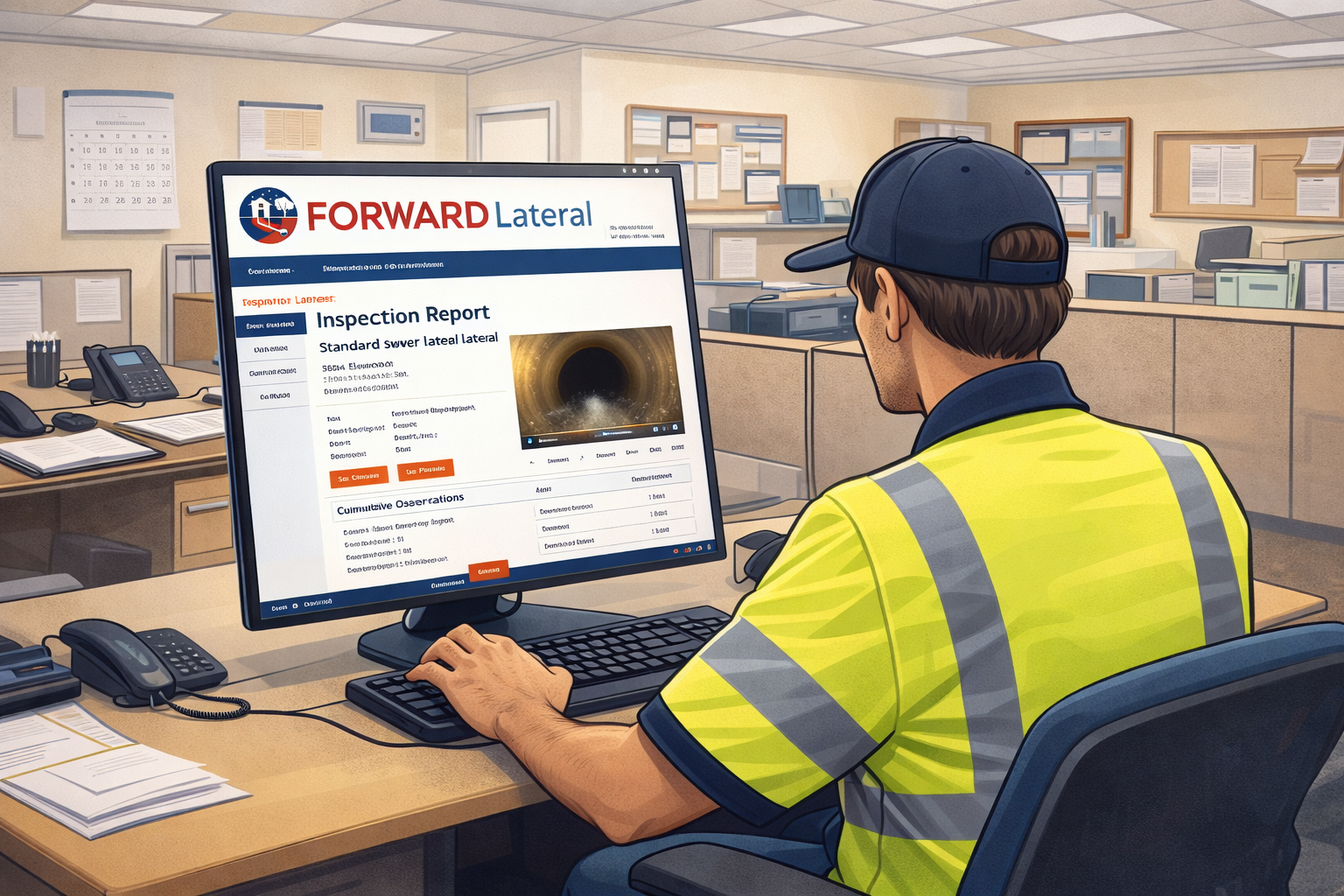
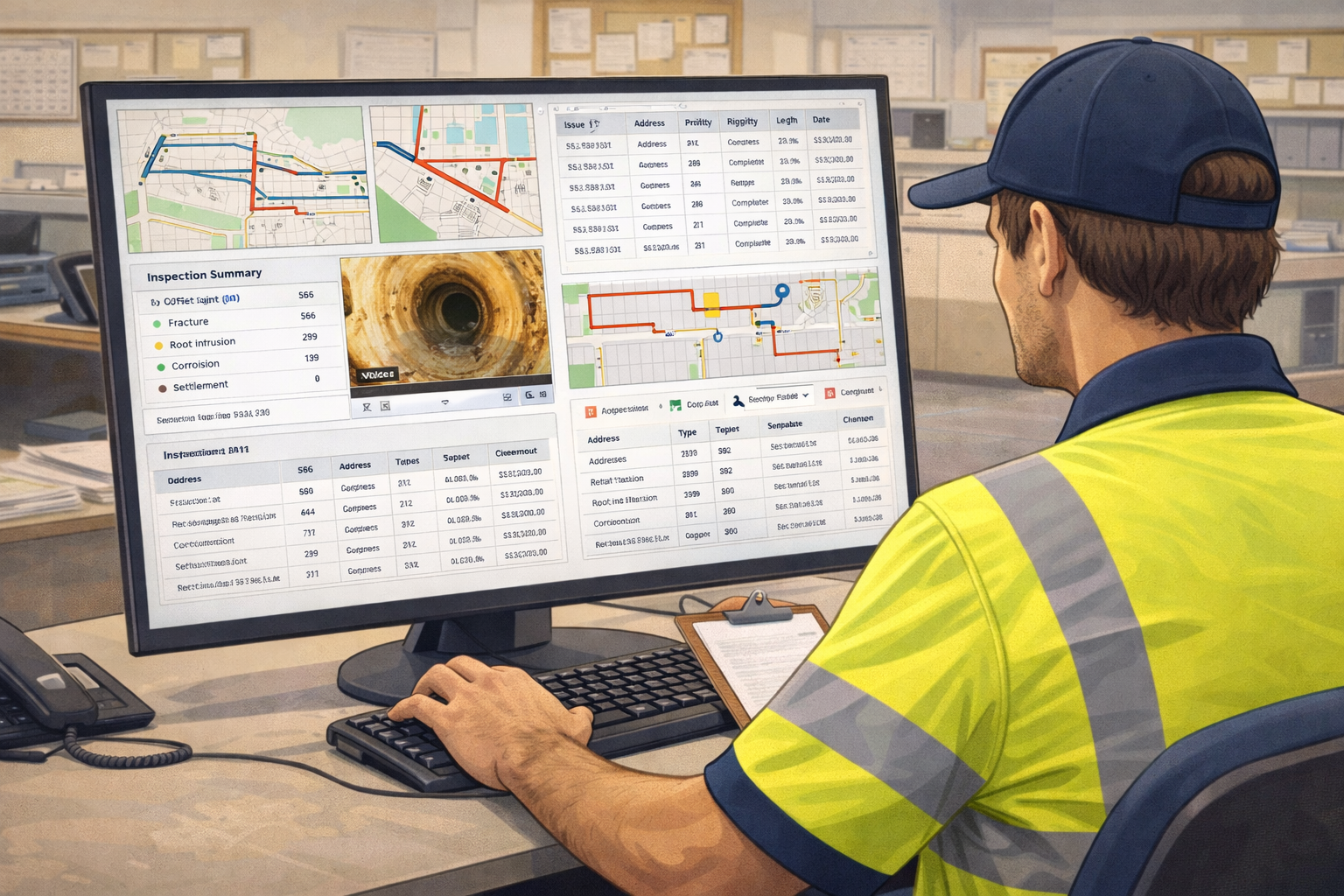
City staff evaluate each inspection, confirm defect scoring, and determine whether the lateral requires repair, further inspection, or clearance.
Forward Lateral standardizes this review process, ensuring consistency across all inspections and neighborhoods.
3. Notify Property Owners
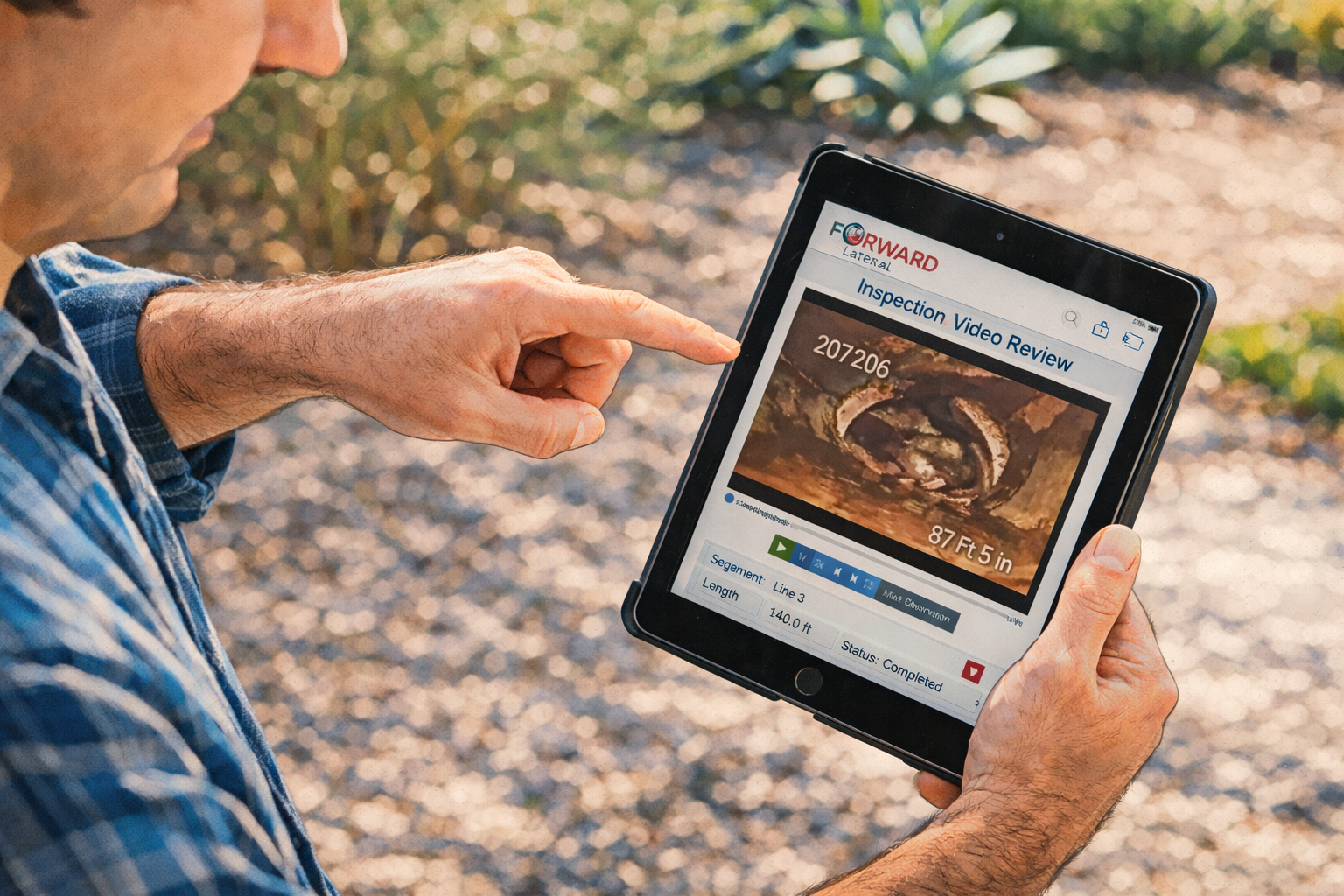
Homeowners receive a clear, easy-to-understand report showing inspection results, defects found, and next steps.
Plumbers and contractors receive the same information so everyone stays aligned throughout the compliance cycle.
4. Permits and Repairs
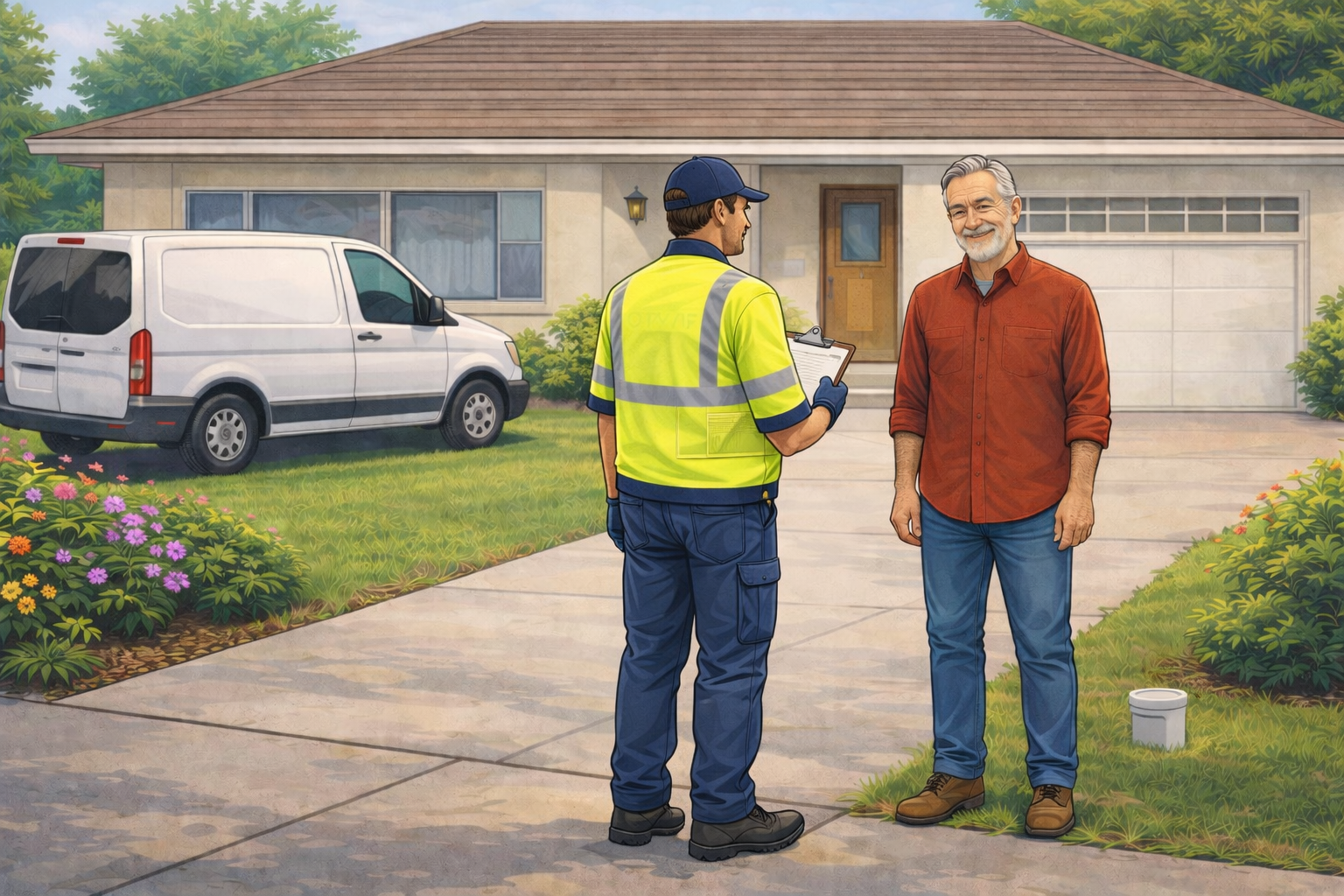
Property owners hire a plumber, pull the appropriate permits, and complete any required repairs or replacements.
Forward Lateral tracks all documentation, repair confirmations, and follow-up inspections, giving the city a clean audit trail.
5. Final Sign-Off
City staff review post-repair materials or updated CCTV footage and issue a compliance clearance.
The Forward Lateral system updates the citywide database automatically.
6. Ongoing Tracking & Reporting
The city maintains a continuously updated record of all private sewer laterals — inspections, defects, repairs, and compliance status.
Forward Lateral generates reports, sends automated reminders, and provides dashboards ready for internal review or council presentations.
Two Ways to Run Your Inspection Program
Forward Lateral supports both major approaches used by municipalities today.
Cities can choose one method or run a hybrid model — both flow into the same compliance system.
Pathway 1 — Plumber-Submitted Inspections
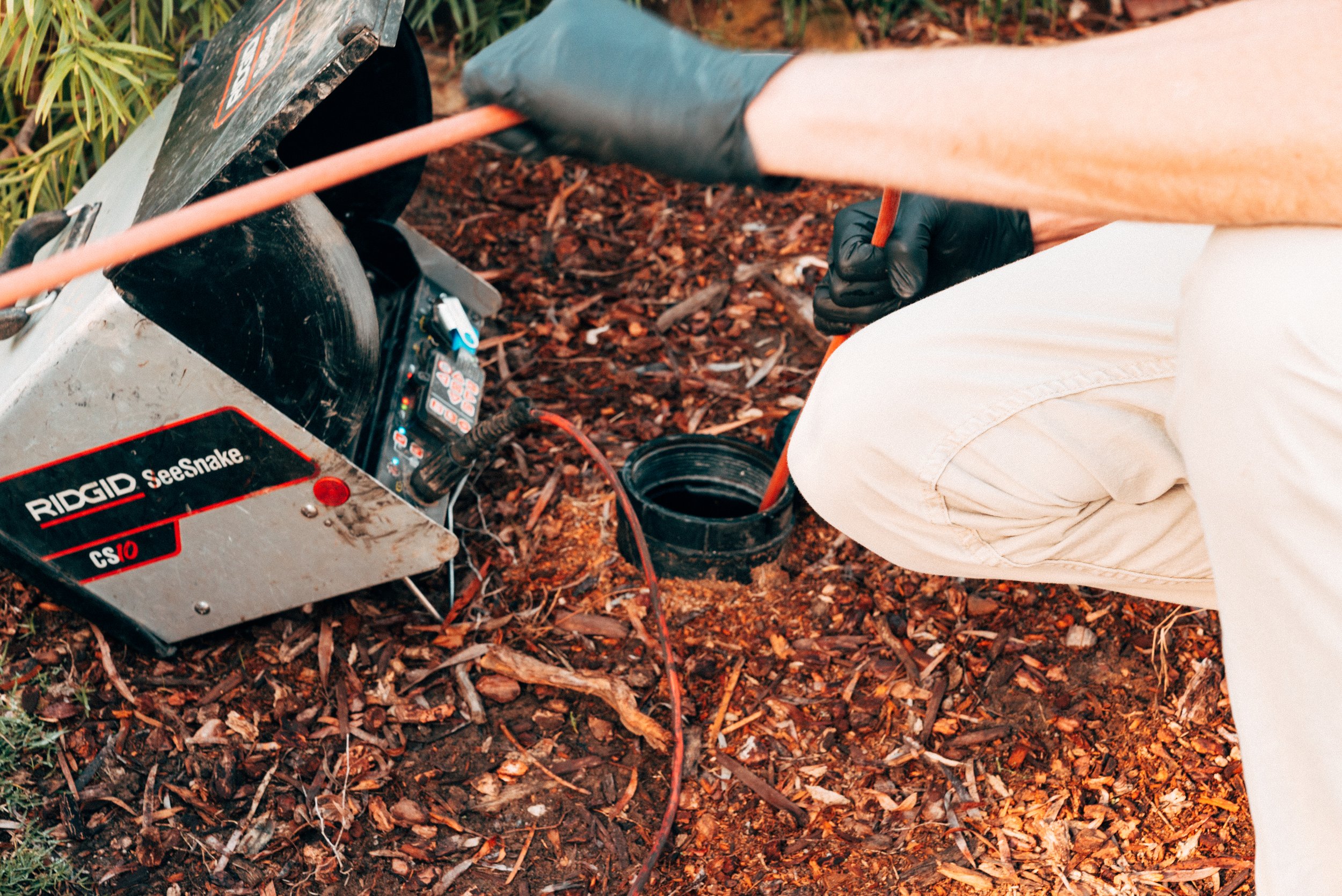
Homeowners hire a licensed plumber to perform a push-camera inspection.
Plumbers upload footage directly into Forward Lateral, where city staff review the inspection, issue next steps, and track permits and repairs. All data is stored in a searchable compliance database.
Pathway 2 — Sewer Lateral Van Workflow
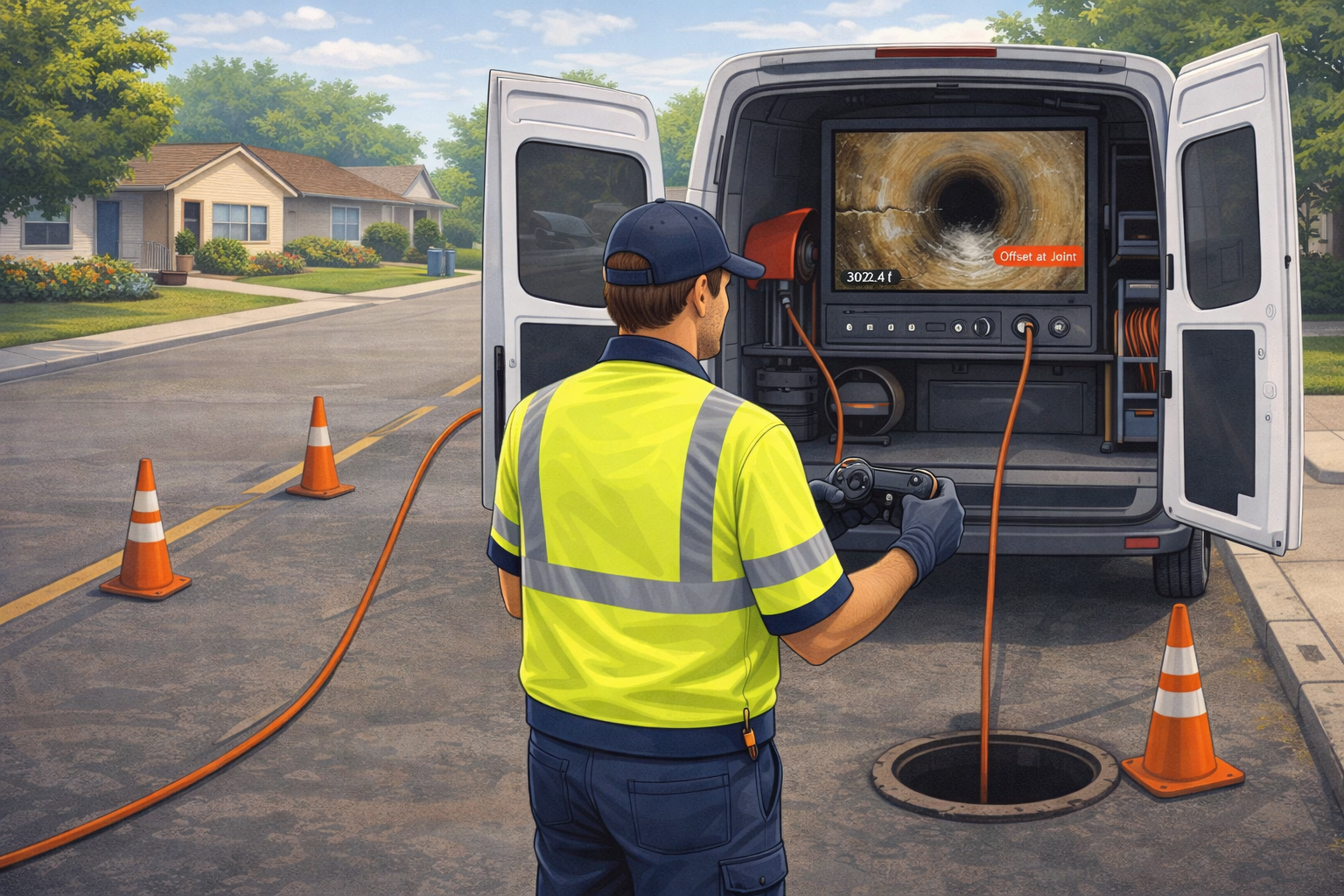
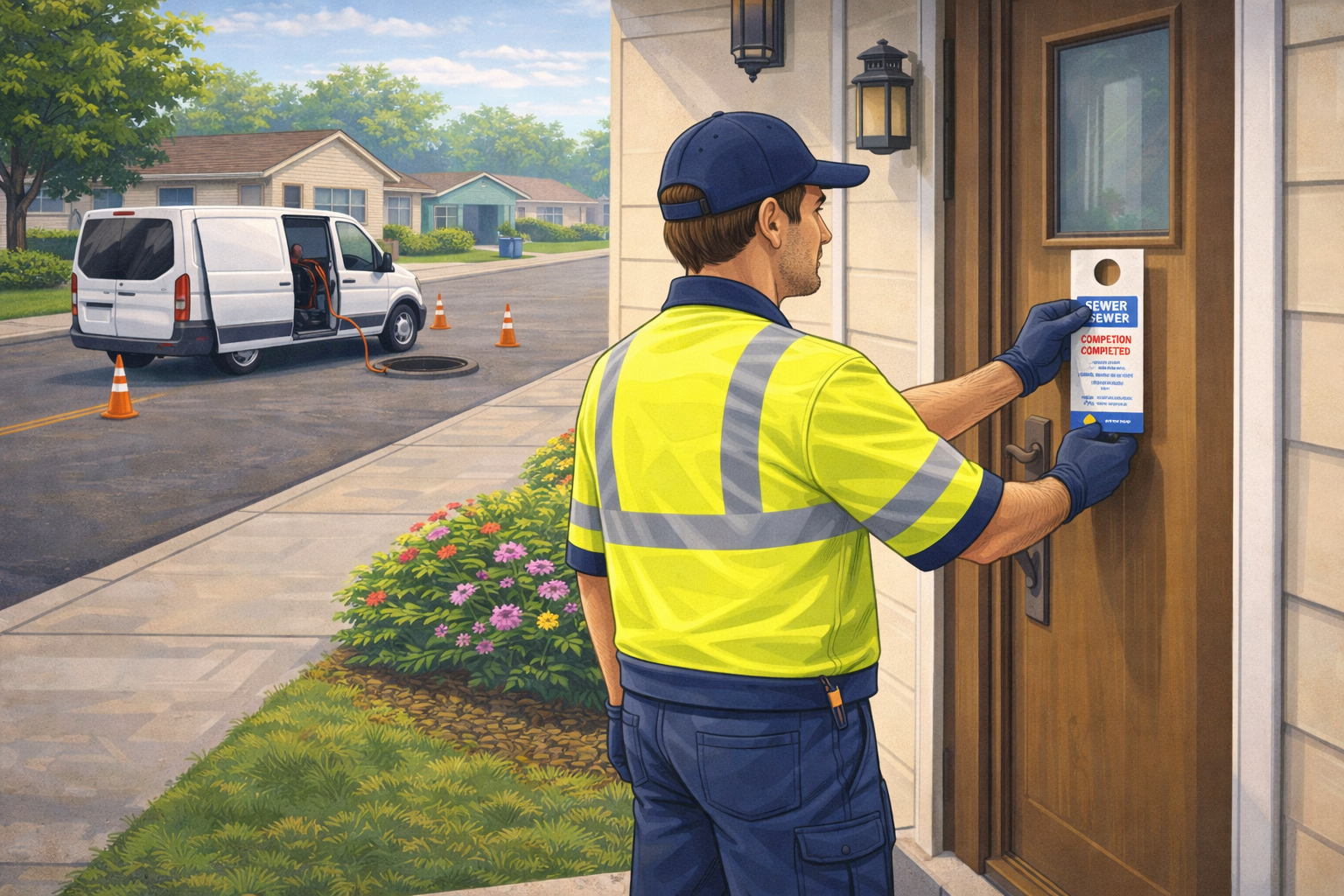
Mainline CCTV crews record short lateral video clips while televising the sewer main.
Each clip is assigned to the correct property, the owner verifies their information online, and the inspection enters the municipal review queue. The city evaluates the condition, sends next steps, and tracks repairs in the system.
The Transparent Compliance Cycle
Forward Lateral standardizes the entire inspection-to-repair workflow so homeowners, plumbers, and city staff always know exactly where a property is in the process.
This reduces confusion, increases compliance, and creates a defensible record of outreach and enforcement.
Modeled Risk Reduction
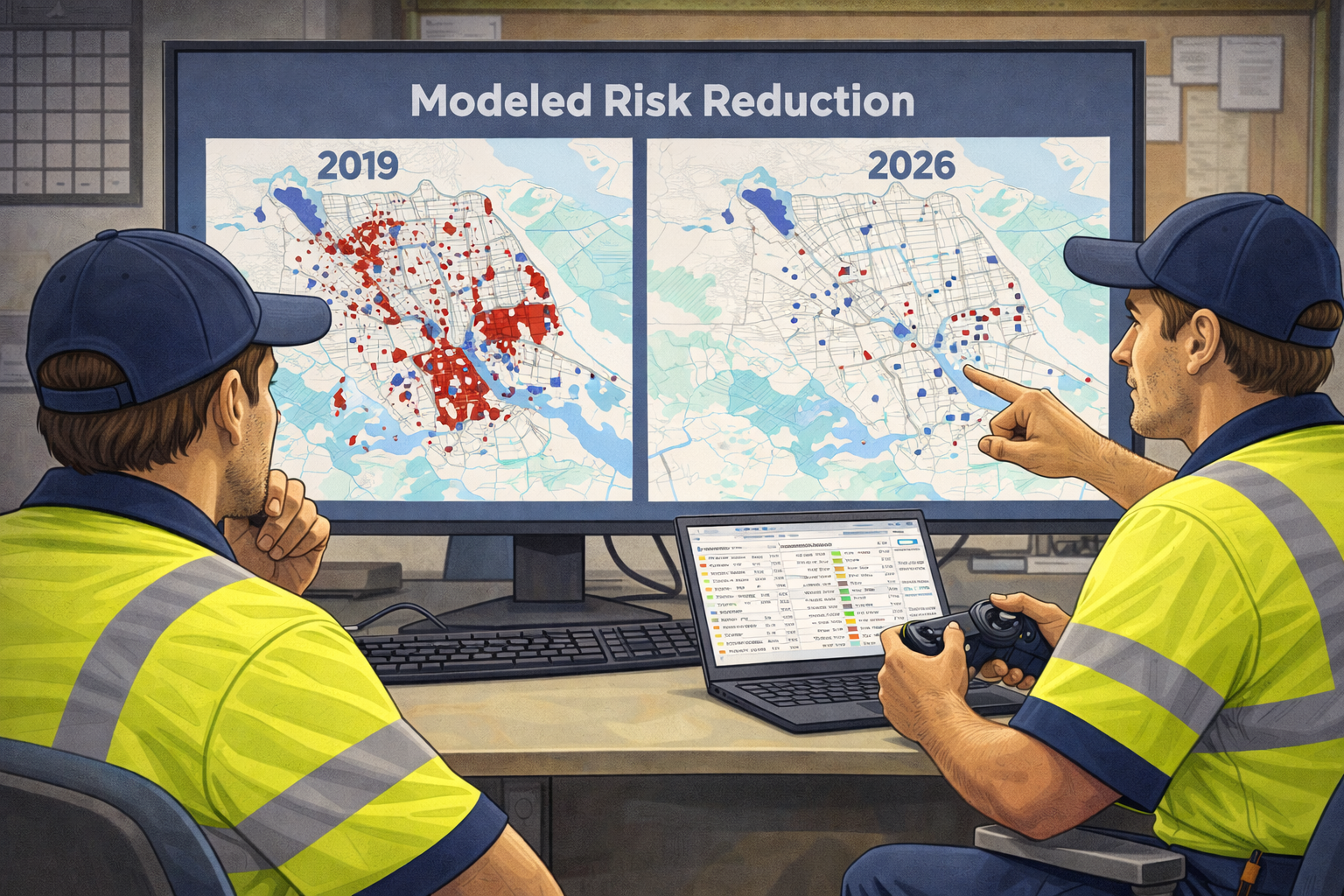
Using existing municipal data — often from ArcGIS and historical spill records — Forward Lateral models current private lateral spill risk and shows how certain program improvements can reduce spill probability over time.
As the program runs, the model updates with real inspection results, producing measurable improvements the city can present to leadership and the public.
Start With Your Sewer Risk Snapshot
See how the Forward Lateral program would look in your city.
We’ll analyze your inspection coverage, risk areas, and program structure, then walk your team through the findings.